How Close Can a Fragrance Clone Smell to the Original?
Some fragrance clones capture the original almost immediately, while others become closer in the drydown. The best comparison follows both scents through their full development.
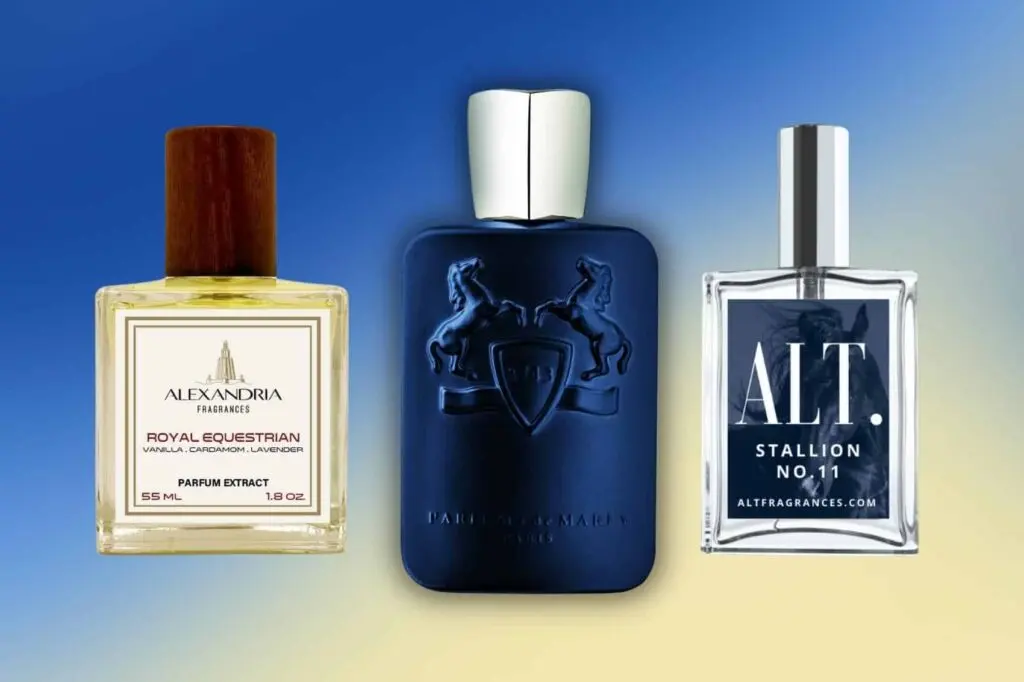
A fragrance clone can smell extremely close to its original without being identical.
The closest clones usually reproduce more than one recognizable note. They preserve a similar overall scent profile, balance of accords, and drydown across much of the wear.
Other clones may match only the opening or capture the original’s broader style without following it closely from beginning to end.
The most useful question is therefore not simply “Does it smell similar?” but “Where does the similarity appear, and how long does it last?”
What makes two fragrances smell similar?
Fragrance similarity describes how closely one scent resembles another in actual smell.
That resemblance may involve:
- The opening
- Dominant notes and accords
- The balance between freshness, sweetness, woods, spices, or smoke
- The transition between scent stages
- The heart and drydown
- Texture and density
- The overall character of the fragrance
Similarity does not mean that two perfumes use the same formula, ingredients, or proportions.
Different materials can create a comparable scent impression. Two fragrances can also publish similar note lists while smelling noticeably different because those notes are expressed or balanced differently.
A useful comparison should therefore consider the full wearing experience rather than relying on note lists or one quick spray.
How close can a fragrance clone get?
Some clones can smell close enough that a casual wearer may struggle to identify which fragrance is being worn, especially from a distance or in the air.
Differences often become easier to notice during a direct comparison.
They may appear when:
- Both fragrances are sprayed side by side
- The openings are examined closely
- The scents are followed into the drydown
- Individual notes are compared instead of the overall impression
- Longevity and projection are evaluated separately
- The wearer already knows the original well
A close clone may reproduce the original’s main character while still having a sharper opening, sweeter base, flatter development, denser texture, or stronger projection.
Those differences may seem minor to one person and obvious to another.
Opening similarity vs drydown similarity
Similarity can change significantly as a fragrance develops.
The opening
The opening is the first stage after a fragrance is sprayed.
It often contains brighter, more volatile effects associated with citrus, fruit, herbs, spices, or fresh aromatic notes. Because these features can be highly recognizable, a clone may appear especially accurate during its first few minutes.
A convincing opening may reproduce:
- A familiar citrus or fruit accord
- A distinctive burst of freshness
- A recognizable sweet or smoky effect
- A particular combination of spice and aromatics
- The original fragrance’s immediate first impression
The opening is temporary, however.
A clone that seems highly accurate for five minutes may move in a different direction as the brighter materials fade.
The drydown
The drydown is the later stage after much of the opening has disappeared.
It often contains longer-lasting woody, amber, musk, vanilla, leather, resinous, or earthy effects. Because the drydown can remain for much of the wear, it often has a greater influence on whether a clone feels like a convincing replacement.
A clone with a similar drydown may remain recognizable as the original for hours, even when its opening differs.
A clone with a less accurate drydown may begin close and later become:
- Sweeter
- Woodier
- More powdery
- More musky
- Less smoky
- Less complex
- Flatter or more linear
For many buyers, the drydown matters more than a perfect first five minutes because it represents most of the time the fragrance is actually worn.
Why some clone openings seem harsher
Some clones are described as sharper, rougher, or more synthetic-smelling in their opening.
These descriptions are subjective, but they may reflect differences such as:
- More prominent alcohol immediately after spraying
- Sharper citrus or aromatic effects
- A stronger emphasis on one recognizable accord
- A sweeter or denser first impression
- Less smooth blending between notes
- Faster movement into the heart of the fragrance
A rough opening does not automatically make the entire fragrance inaccurate.
Some clones become much closer after several minutes. Others remain noticeably different throughout the wear.
This is another reason not to judge similarity from the opening alone.
Why matching notes do not guarantee similarity
Fragrance note lists are useful descriptions, but they are not complete formulas.
They usually do not reveal:
- Every aromatic material used
- The amount of each material
- How an accord is constructed
- Which notes are most prominent
- How the fragrance changes over time
- How the materials interact with one another
Two perfumes may both list bergamot, fruit, woods, and musk while producing very different results.
The reverse is also possible. A clone and original may publish different note lists while still smelling close because their materials create a similar set of accords.
Matching notes should therefore be treated as supporting evidence, not proof of similarity.
Note balance affects the entire scent
Note balance describes how strongly different parts of a fragrance are perceived in relation to one another.
Two fragrances may contain similar ideas but emphasize them differently.
For example, both may include:
- Citrus
- Fruit
- Woods
- Musk
- Amber
One fragrance may place citrus and fruit at the center. The other may emphasize woods, musk, and amber.
The note lists may look similar even though the fragrances feel different.
Balance can make a clone seem:
- Fresher or darker
- Sweeter or drier
- Lighter or denser
- Smoother or sharper
- More suitable for warm or cool weather
- More direct or more complex
A clone does not need every note to appear at exactly the same strength, but the overall proportions strongly influence how close it feels to the original.
Overall scent profile matters more than one note
The overall scent profile is the complete impression created by the fragrance.
It may be described as:
- Fresh and woody
- Fruity and smoky
- Sweet and amber-like
- Spicy and aromatic
- Floral and powdery
- Dark and resinous
- Clean and musky
A close clone usually reproduces the main structure and character of the original, not just one recognizable ingredient.
Sharing a pineapple-like opening, for example, does not automatically make two fragrances close if their woods, smoke, musk, sweetness, and drydown differ significantly.
A fragrance that reproduces only one prominent note may remind people of the original without functioning as a close clone.
Texture and development can change perceived similarity
Fragrances can share notes and accords while feeling different in texture.
A scent may be perceived as:
- Airy
- Dense
- Creamy
- Dry
- Sparkling
- Smooth
- Rough
- Transparent
- Heavy
These terms describe the impression of the composition rather than the physical texture of the liquid.
A clone may match the original’s notes but feel thicker, sweeter, or more compressed. Another may seem thinner or more transparent.
Development also matters.
Some fragrances are relatively linear, meaning their main character remains consistent throughout the wear. Others move through more distinct opening, heart, and base stages.
A clone may simplify the original’s development and focus on its most recognizable accord. That can make it easier to understand and may even suit some buyers better, but it can reduce similarity for people who value the original’s transitions and smaller details.
Similarity and performance are different measurements
Longevity and projection can influence the wearing experience, but they do not directly measure scent similarity.
A clone that projects much more strongly may make certain notes seem more dominant. A softer clone may feel smoother or less detailed because it stays closer to the skin.
Performance differences can include:
- A louder opening
- Faster fading
- A longer-lasting base
- Stronger sweetness in the air
- Less noticeable development
- Greater projection but less detail up close
Similarity, longevity, and projection answer different questions:
- Similarity: How closely does it smell like the original?
- Longevity: How long does it remain detectable?
- Projection: How far does it radiate from the wearer?
A high-performing clone is not automatically a more accurate one.
A fragrance can last longer than the original while smelling less similar. It can also smell extremely close while projecting less or fading sooner.
Why people disagree about clone similarity
Similarity is partly subjective.
People may reach different conclusions because of:
- Familiarity with the original
- Skin and application differences
- Temperature and humidity
- Olfactory sensitivity
- Fragrance age and storage
- The stage being compared
- Personal attention to specific notes
- Whether the comparison is made up close or in the air
Someone who has worn the original for years may notice details that a newer wearer overlooks.
Another person may care more about the fragrance’s scent trail than small differences found during a side-by-side test.
Both impressions can be sincere.
This is why community data becomes more useful when it includes multiple voters rather than relying on one review or comparison.
How FragIndex similarity scores work
FragIndex similarity scores reflect how closely community voters believe a clone resembles its original fragrance.
The score measures perceived scent resemblance.
It does not measure:
- Whether the clone smells better
- Longevity or projection
- Price or value
- Ingredient quality
- Formula identity
- Legality or authorization
- Brand affiliation
A higher score indicates that voters generally perceive a closer scent match.
A lower score may suggest that the fragrance is a looser interpretation, a modified clone, or a broader alternative.
The percentage is a summary of subjective community judgments rather than a laboratory measurement. It describes the overall perceived relationship and does not guarantee that every stage of the fragrance matches equally well.
Why vote count matters
A similarity score should always be read alongside its number of votes.
A score based on three votes is less stable than a score based on fifty.
When the vote count is low:
- One new rating can change the average significantly
- The current voters may not represent a broad range of experiences
- Small differences between scores may not be meaningful
- The result should be treated as preliminary
For example, an 88% similarity score based on four votes should not automatically be considered more dependable than an 85% score supported by a much larger sample.
FragIndex scores can change as more users contribute.
Vote count helps distinguish early data from a more established community assessment.
A higher similarity score does not always mean a better choice
Similarity measures closeness, not overall quality or suitability.
A highly similar clone may still have:
- Weaker longevity
- More projection than the buyer wants
- A harsher opening
- Less detailed development
- Limited availability
- A scent profile the buyer does not enjoy
A less similar clone may appeal to someone because it changes the original in a preferred direction.
A buyer might choose an option that is:
- Fresher
- Less sweet
- Stronger in the drydown
- Softer for work
- Better suited to warm weather
- More focused on a favorite accord
The closest clone and the best clone for a particular buyer are not always the same fragrance.
How to compare a clone properly
A useful comparison should follow both fragrances through several stages.
Test under similar conditions
Apply a similar amount of each fragrance and compare them in the same environment.
Testing one indoors during cold weather and the other outdoors during summer makes the comparison less dependable.
Compare the openings separately
Notice the first impression, but do not make a final judgment immediately.
Look for differences in:
- Sharpness
- Freshness
- Sweetness
- Fruit
- Citrus
- Spice
- Alcohol prominence
Revisit them after the opening
Compare both fragrances again after the brighter top notes have faded.
This is often where major differences begin to appear.
Follow the drydown
Pay attention to the longer-lasting woods, musk, amber, vanilla, leather, smoke, or other base effects.
Ask whether the fragrances still feel recognizably related after several hours.
Separate similarity from performance
Do not raise a similarity judgment only because one fragrance lasts longer or projects more strongly.
Repeat the comparison
One test can be affected by fatigue, weather, application, or expectations.
Comparing the fragrances more than once produces a more useful impression.
How FragIndex helps compare clones
The FragIndex clone index connects original fragrances with clones they are commonly understood or identified as resembling.
Individual “clones of” pages organize several alternatives around one reference fragrance. These pages make it easier to compare:
- Similarity scores
- Vote counts
- Longevity
- Projection
- Scent ratings
- Notes
- Main accords
- Individual fragrance records
You can explore pages such as:
- Clones of Creed Aventus
- Clones of Baccarat Rouge 540
- Clones of Dior Sauvage Eau de Parfum
- Clones of Parfums de Marly Layton
You can also compare two fragrances directly to review their notes, accords, performance, and community ratings side by side.
The practical answer
A fragrance clone can smell extremely close to the original, but identical is usually too strong a claim.
The most convincing clones maintain a similar overall structure through more than the opening. They reproduce the original’s recognizable accords, balance, drydown, texture, and character across much of the wear.
Some clones are strongest in the first few minutes. Others begin differently but become closer in the drydown.
Compare the full development rather than judging one spray. Read FragIndex similarity scores alongside their vote counts, and keep performance separate from scent resemblance.
The highest-scoring clone may be the closest, but it is not automatically the best choice for every buyer.
Browse the FragIndex clone index to find documented relationships, or open an individual “clones of” page to compare several alternatives to the same original.
Frequently asked questions
Can a fragrance clone smell identical to the original?
A clone can smell very close, but identical is usually too strong a claim. Differences may appear in the opening, note balance, texture, drydown, longevity, or projection even when the overall scent profile is highly similar.
Why does a clone smell close at first but different later?
A clone may reproduce the original’s most recognizable opening while using a different balance in the heart or base. As the top notes fade, those differences can become more noticeable.
Do matching note lists mean two fragrances smell alike?
No. Note lists do not reveal the complete formula, proportions, or strength of each material. Two fragrances can list similar notes and smell different, while different note lists can still create a similar overall effect.
What does a FragIndex similarity score measure?
A FragIndex similarity score reflects how closely community voters believe a clone resembles its original in scent. It should be read alongside the vote count because scores based on a small sample may change as more users contribute.
Does a higher similarity score mean the clone is better?
Not necessarily. A higher score suggests a closer scent match, but it does not measure whether the clone smells better, lasts longer, projects more strongly, or better suits a particular buyer.