Should You Blind Buy a Fragrance?
Blind buying is not automatically a bad idea. The real question is how much uncertainty you are accepting and whether the price, scent profile, and available information make that risk reasonable.
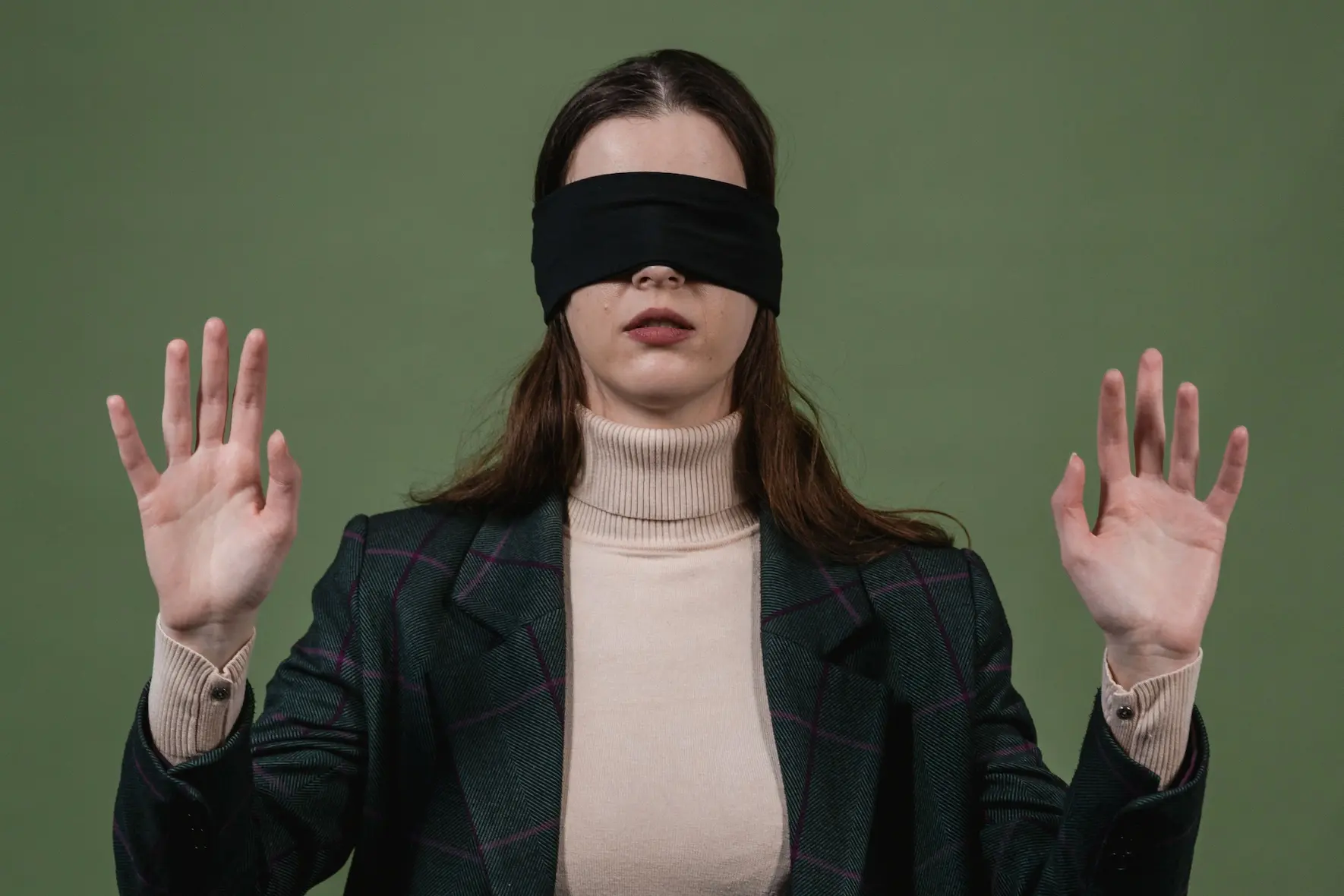
Blind buying means purchasing a fragrance without smelling or wearing it first.
It is not automatically a bad idea.
The real question is how much uncertainty you are accepting, how much money is at risk, and how much useful information you have before buying.
A low-priced fragrance in a scent style you already know is a very different blind buy from an expensive bottle in a fragrance family you have never smelled.
So instead of asking:
"Should I ever blind buy?"
ask:
"How risky is this particular blind buy for me?"
Why blind buying fragrance is difficult
Fragrance is hard to predict from research alone.
A note list can tell you that a perfume contains bergamot, vanilla, amber, and woods.
It cannot tell you exactly:
- How sweet the vanilla will be
- Which note dominates
- Whether the woods feel dry or creamy
- How dense or airy the fragrance feels
- How the opening develops
- What the drydown smells like
- Whether you will enjoy wearing it
Two fragrances can publish similar note lists and still smell noticeably different.
Notes are useful for understanding direction.
They are not a formula.
That uncertainty is the main risk of blind buying.
Start with the cost of being wrong
Before researching the fragrance itself, ask what happens if you dislike it.
A $25 blind buy you can easily absorb is different from a $250 bottle that cannot be returned.
Consider:
- Total purchase price
- Shipping costs
- Return policy
- Whether opened fragrance can be returned
- Whether a smaller bottle is available
- Whether a sample or decant is available
- Whether you would realistically resell it
Price does not tell you whether a fragrance is good.
It determines how expensive a bad decision becomes.
The higher the cost of being wrong, the stronger the case for sampling first.
A practical blind-buy checklist
Before purchasing a fragrance you have never smelled, work through these questions.
1. Do you already know the scent style?
Risk is lower when you already know that you enjoy the general profile.
For example:
- Fresh citrus and woods
- Sweet vanilla and amber
- Rose and oud
- Aromatic blue fragrances
- Dry vetiver
- Tobacco and vanilla
- Clean musks
That does not guarantee you will like every fragrance in the category.
It simply reduces the amount of completely unfamiliar territory.
2. Have you smelled similar fragrances?
Related scents can provide useful reference points.
If a fragrance is repeatedly compared with perfumes you already know, examine:
- Shared accords
- Note overlap
- Similar fragrances
- Clone relationships
- Direct comparison pages
Do not assume "similar" means interchangeable.
A fragrance can resemble something you enjoy while differing in exactly the part you care about most.
3. Is it a clone of something you already know?
Clone fragrances can sometimes be easier to evaluate because the original gives you a reference point.
If you already know the original, check:
- Similarity score
- Similarity vote count
- Opening differences
- Drydown differences
- Longevity
- Projection
- Main accords
A clone with established similarity data may be easier to predict than a completely unfamiliar fragrance.
It is still not guaranteed to suit you.
A clone may be sweeter, sharper, more powerful, more linear, or different in the drydown even when its overall similarity is high.
Browse the FragIndex clone index when evaluating a fragrance with a known original.
4. How much community data is available?
Community data can reduce uncertainty, but vote count matters.
Useful information may include:
- Scent ratings
- Similarity ratings
- Longevity
- Projection
- Season ratings
- Occasion ratings
- Vote counts
A high rating based on only a few votes is less established than one supported by a much larger sample.
Low vote counts do not make the data useless.
They mean the result should be treated as preliminary.
5. Are you relying too heavily on notes?
One of the easiest blind-buy mistakes is seeing several notes you like and assuming you will like the finished fragrance.
You might enjoy bergamot, vanilla, woods, and amber individually while still disliking how a particular perfume combines them.
Use note lists to understand the fragrance's direction.
Do not treat them as a recipe.
6. Does it contain something you often dislike?
A familiar deal-breaker may matter more than several notes you enjoy.
Examples might include:
- Heavy smoke
- Leather
- Oud
- Powder
- Very sweet vanilla
- Patchouli
- Strong white florals
- Marine effects
- Animalic effects
These preferences are personal.
The important part is knowing which characteristics regularly stop you from enjoying a fragrance.
7. Do you know how it develops?
The opening can be misleading.
A fragrance may begin fresh and citrusy before becoming sweet and woody.
Another may open sharply or smokily and settle into a much smoother drydown.
When possible, look for information about both the opening and later stages.
You will usually wear the drydown much longer than the first few minutes.
8. Does performance matter to you?
If weak longevity or projection would make you regret the purchase, research performance before blind buying.
FragIndex separates:
- Longevity: how long the fragrance remains detectable
- Projection: how far it radiates from the wearer
- Similarity: how closely a clone resembles its original
These measurements answer different questions.
A clone can last longer than the original while smelling less accurate. A scent can smell excellent while projecting softly.
Focus on the data that corresponds to your priorities.
9. Are you buying because of hype?
Be cautious when the main reasons for buying are claims such as:
- "Everyone loves this."
- "Safest blind buy ever."
- "Guaranteed compliment getter."
- "You need this in your collection."
- "Nobody dislikes this."
No fragrance is universally liked.
Popularity can show that many people are interested in a fragrance.
It cannot predict your own preference.
The same applies to FOMO from sales, limited stock, influencer attention, or discontinuation rumors.
Ask whether you would still want the fragrance without the urgency.
10. Can you sample or buy a smaller size?
A sample, decant, travel spray, discovery set, or smaller bottle can reduce the amount of money at risk.
Sampling is especially useful when:
- The fragrance is expensive
- The scent family is unfamiliar
- The composition appears polarizing
- You are unsure about a major note
- Returns are restrictive
But sampling does not always make economic sense.
If a sample and shipping cost a large percentage of an inexpensive full bottle, a carefully researched blind buy may be reasonable.
The calculation changes with the price of the fragrance.
Cheap does not automatically mean low risk
A low price makes one blind buy easier to justify.
It can also make repeated blind buying easier to rationalize.
Five $30 bottles you rarely wear still cost $150.
So instead of asking only:
"Can I afford this?"
also ask:
"Would I rather own this fragrance than keep the money for something I already know I want?"
A cheap fragrance you never use is still poor value.
Ratings help, but they are not predictions
A high community rating tells you that the people who voted generally liked the fragrance.
It does not tell you that the fragrance matches your preferences.
For example, a highly rated sweet fragrance may still be a poor blind buy for someone who usually dislikes sweet scents.
Ratings are most useful when combined with:
- Your own scent preferences
- Accord and note information
- Similar fragrances
- Vote count
- Performance data
Treat ratings as evidence, not a personalized recommendation.
Reviews are most useful when patterns repeat
One review saying a fragrance is extremely sweet does not establish how everyone will perceive it.
But repeated descriptions across independent reviewers can provide useful clues.
If many people consistently mention:
- Heavy sweetness
- Sharp citrus
- Strong leather
- A smoky opening
- A powdery drydown
that pattern may tell you something not obvious from the official note list.
Community descriptions are still subjective.
Look for repeated observations rather than dramatic individual claims.
Be cautious with exact performance claims
Performance can vary with:
- Skin
- Climate
- Application
- Clothing
- Testing environment
- Olfactory adaptation
- Individual perception
One person reporting three hours of longevity does not mean you will get three hours.
Someone reporting twelve hours does not guarantee twelve either.
Aggregate longevity and projection data is generally more useful than one individual report, especially when supported by a meaningful number of votes.
When blind buying makes more sense
Blind buying becomes easier to justify when several favorable factors line up:
- The purchase price is relatively low
- You know the scent family
- You already enjoy similar fragrances
- It is a clone of an original you know
- Useful similarity or community data is available
- There are no obvious deal-breaker notes
- Returns are reasonable
- Sampling would cost a large percentage of the bottle price
None of these guarantees that you will like the fragrance.
They simply reduce uncertainty.
When sampling first makes more sense
Sampling becomes more valuable when:
- The bottle is expensive
- The fragrance cannot be returned
- The scent style is unfamiliar
- Major notes are outside your usual preferences
- The fragrance is described in very conflicting ways
- Community data is limited
- Small scent differences matter a lot to you
The simplest rule is:
The more expensive a mistake would be, the more valuable testing becomes.
Are clones easier to blind buy?
Sometimes.
If you already know the original fragrance, you are not trying to predict a completely unfamiliar scent.
Instead, you are asking:
How much will this clone differ from something I already know?
That is where FragIndex similarity data becomes especially useful.
Check:
- Similarity score
- Similarity vote count
- Main accords
- Notes
- Longevity
- Projection
- Editorial comparison information
Also look at where the clone differs.
A high overall similarity score can still hide a harsher opening, sweeter drydown, stronger projection, or more linear development.
Whether those differences matter depends on why you liked the original.
Use the FragIndex clone index to browse documented relationships and individual "clones of" pages.
A simple blind-buy risk framework
Rather than treating blind buying as safe or unsafe, think about how many risk factors are present.
Lower risk
A purchase may be lower risk when most of these apply:
- Lower price
- Familiar scent profile
- Similar fragrances you already like
- Useful community data
- Strong clone similarity data when relevant
- Easy returns
Higher risk
Risk increases when several of these apply:
- High price
- Unfamiliar scent family
- Notes you are unsure about
- Limited community data
- No sampling option
- No returns
- Buying mainly because of hype or FOMO
You do not need to assign a formal score.
The point is to notice when several uncertainties are stacking together.
Before you buy
A shorter final checklist is usually enough:
- Do I know this scent style?
- Have I smelled anything similar?
- Are there notes or accords I often dislike?
- How much community data supports what I am reading?
- Do I understand both the opening and drydown?
- Does longevity or projection matter strongly to me?
- Can I sample it or buy a smaller size?
- Can I return it?
- How much money am I actually risking?
- Would I still want it without the hype, discount, or urgency?
You do not need complete certainty.
The goal is to understand the uncertainty before spending money.
How FragIndex can reduce blind-buy uncertainty
FragIndex cannot tell you with certainty whether you will like a fragrance.
No database can replace smelling it yourself.
What FragIndex can do is reduce the number of unknowns.
Individual fragrance pages can help you examine:
- Notes
- Main accords
- Scent ratings
- Longevity
- Projection
- Community vote counts
- Similar fragrances
For clones, FragIndex also connects the fragrance with its reference original and provides available similarity data.
Use FragIndex fragrance search when researching a specific fragrance, or browse the FragIndex clone index when looking for alternatives to an original you already know.
If you are choosing between two specific fragrances, use the FragIndex comparison tool to review their available data side by side.
The practical answer
Blind buying is not automatically a bad idea.
It becomes more reasonable when the financial risk is limited, you already know the scent profile, useful community data is available, and sampling would be inconvenient or disproportionately expensive.
Sampling becomes more valuable when the fragrance is expensive, unfamiliar, difficult to return, or poorly documented.
The safest purchase is one you have already tested.
But when testing first is impractical, a well-researched blind buy can still be reasonable.
The goal is not to eliminate uncertainty.
It is to understand how much uncertainty you are paying for before you buy.
Frequently asked questions
What does blind buying a fragrance mean?
Blind buying means purchasing a fragrance without smelling or wearing it first. You may still research its notes, accords, reviews, ratings, similar fragrances, and clone relationships before buying.
Is blind buying fragrance a bad idea?
Not always. Risk is lower when the fragrance is inexpensive, you already know the scent style, useful community data is available, or returns are easy. Risk is higher when the fragrance is expensive, unfamiliar, or difficult to return.
Can notes tell me whether I will like a fragrance?
Only partly. Note lists can describe the fragrance's direction, but they do not show the complete formula, balance, texture, development, or how strongly each note will appear.
Should I buy a sample before buying a full bottle?
Sampling is usually the lower-risk option when it is reasonably available, especially for expensive or unfamiliar fragrances. A sample lets you evaluate the opening, drydown, longevity, projection, and whether you actually want to wear the scent.
Are clone fragrances safer to blind buy?
They can be easier to evaluate when you already know the original because similarity data gives you a reference point. A clone can still differ in its opening, drydown, sweetness, performance, or overall balance.