
What Is a Fragrance Clone? Clones and Inspired-By Scents Explained
A fragrance clone is designed to resemble another perfume while remaining a separately branded product. Some are close copies of the scent profile, while others are looser interpretations.
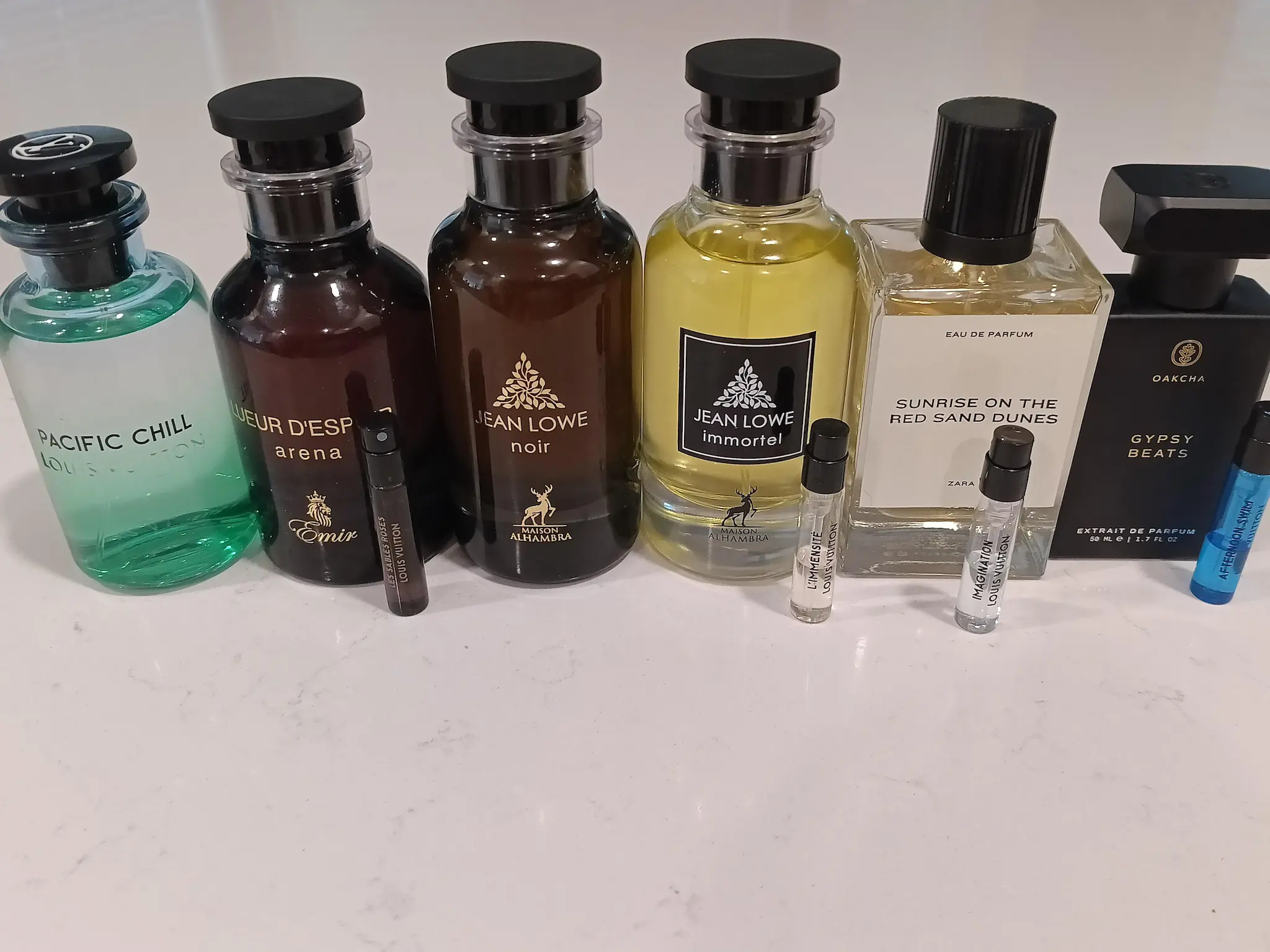
A fragrance clone is a separately branded perfume designed to resemble a specific original fragrance.
It uses its own brand, name, bottle, and identity rather than pretending to be the original product. Some clones smell very close to their reference fragrance, while others reproduce only its general style or change parts of the scent.
A clone is therefore not automatically an exact copy, and it is not the same as a counterfeit.
What does “fragrance clone” mean?
A fragrance clone is intentionally designed or widely understood to smell similar to another perfume.
The fragrance being copied or interpreted is usually called the original or reference fragrance.
A clone generally:
- Uses its own brand and fragrance name
- Is sold as a separate product
- Has its own bottle and packaging
- Shares a recognizable scent profile with a specific fragrance
- May be positioned below the original in price
- Can differ in longevity, projection, notes, or development
The defining feature is the scent relationship.
For example, a fragrance identified as a clone of Creed Aventus is being compared specifically with Aventus. That does not mean Aventus invented every fruity, smoky, citrus, or woody accord found in the scent. It means Aventus is the main reference point for that particular relationship.
On FragIndex, original fragrances provide the central pages around which known clones can be organized. A page such as clones of Creed Aventus brings together several fragrances commonly compared with the same original.
How similar is a fragrance clone to the original?
There is no universal similarity requirement that determines whether a fragrance qualifies as a clone.
Some clones follow the original closely from the opening through the drydown. Others reproduce the most recognizable part of the scent while changing its sweetness, freshness, texture, or base.
Similarity may involve:
- A comparable opening
- Shared dominant accords
- Similar note combinations
- A recognizable drydown
- A similar balance of freshness, sweetness, woods, smoke, or spices
- A comparable overall impression
Two fragrances do not need identical note lists to smell similar. Published notes are simplified descriptions of a fragrance, not complete formulas.
The reverse is also true. Two fragrances can list many of the same notes and still smell noticeably different.
Similarity therefore exists on a spectrum. A clone may be very close, moderately similar, or better understood as a loose interpretation.
Community similarity ratings can help describe that relationship, but vote count matters. A high score based on only a few ratings should be treated more cautiously than a score supported by a larger sample.
Are fragrance clones exact copies?
Usually not.
Even a close clone may differ from the original in:
- The first few minutes after spraying
- The strength of individual notes
- Sweetness or freshness
- Texture and density
- The transition between scent stages
- The base and drydown
- Longevity
- Projection
- Sillage
A clone might last longer or project more strongly while smelling less accurate. Another may smell very close but perform more softly.
This is why similarity and performance should be evaluated separately.
A stronger fragrance is not automatically a better clone. A close clone is also not automatically the best choice for every buyer.
Clone vs inspired by vs alternative
The words clone, inspired by, and alternative are often used interchangeably, but they do not always describe the same type of relationship.
Clone
A clone usually has a direct relationship with one specific original fragrance.
It may reproduce that fragrance closely or reinterpret parts of it, but the reference point is generally recognizable.
Inspired by
Inspired by is a broader and often more cautious description.
It may refer to:
- A close interpretation of a specific fragrance
- A modified version of a familiar scent
- A fragrance that changes one or more major accords
- A scent influenced by the same general style
- A fragrance combining elements associated with multiple perfumes
An inspired-by fragrance can be a close clone, but the phrase alone does not establish how similar it is.
Alternative
An alternative is any fragrance that may suit someone interested in another scent, even when it is not a direct clone.
Alternatives may share:
- Dominant accords
- A similar fragrance family
- Comparable freshness or sweetness
- Similar notes
- The same seasonal role
- A related occasion or collection purpose
Every clone can function as an alternative, but not every alternative is a clone.
Someone looking for the closest clone usually prioritizes scent accuracy. Someone looking for an alternative may care more about performance, use case, note emphasis, or overall style.
Is a clone the same as a dupe?
Clone and dupe are often used for the same products, but dupe is a less precise consumer term.
Dupe is short for duplicate and is used across fashion, cosmetics, furniture, and other product categories. In fragrance, it may describe:
- A close clone
- An inspired-by perfume
- A lower-priced substitute
- A broadly similar fragrance
- Any alternative to a more expensive scent
Calling a fragrance a dupe does not establish a specific level of similarity.
FragIndex primarily uses clone for direct documented relationships and alternative for broader recommendations. The word dupe may still appear in editorial content because many readers use it when searching for lower-priced fragrances.
Is a fragrance clone a counterfeit?
No.
A legitimate fragrance clone is presented as its own product. Its real brand, fragrance name, and manufacturer are shown to the buyer.
A counterfeit is falsely presented as the genuine product or uses the original brand’s identity to deceive the buyer.
A clone may:
- Smell similar to a well-known perfume
- Mention the original in comparative marketing
- Use its own interpretation of a familiar style
- Be sold as a lower-priced option
A counterfeit may:
- Display the original brand’s name or logo without authorization
- Copy packaging to appear authentic
- Use false batch codes or authenticity markings
- Be advertised as a genuine bottle when it is not
Packaging can raise separate trademark or consumer-confusion questions, but scent similarity alone does not make a fragrance counterfeit.
FragIndex documents scent relationships. A clone listing is not a legal judgment about a fragrance, its branding, or its packaging.
Why do people buy fragrance clones?
Buyers choose clones for different reasons. The closest option is not always the best one for every person.
Lower cost
Many clones are positioned below their originals in price, which can make a familiar scent profile more accessible.
Prices vary by retailer, region, bottle size, and availability, so current costs should be checked separately.
Different performance
A clone may last longer, project more strongly, or wear more softly than the original.
That difference can be an advantage or a drawback. Strong projection may suit someone looking for noticeable performance but be less appropriate for work, close spaces, or hot weather.
A modified scent profile
Some buyers prefer a clone that adjusts the original.
It may make the scent:
- Fresher
- Sweeter
- Darker
- Smoother
- More direct
- Less complex
A less accurate clone can still be the better choice for someone who prefers those changes.
Easier availability
An alternative may be easier to find when the original is discontinued, regionally restricted, or difficult to sample.
Lower-risk exploration
A lower-priced option can help someone explore a scent style before deciding whether the original is worth considering.
A clone should still be evaluated as its own fragrance rather than only as a cheaper version of something else.
Why can a clone smell or perform differently?
A similar scent does not mean two fragrances use the same formula, materials, or proportions.
Differences may result from:
Different formulas
The clone and original may use different combinations or quantities of aromatic materials while aiming for a similar result.
Different emphasis
A clone may emphasize the most recognizable part of the original and simplify less prominent details.
Performance changes
A fragrance may be designed to project more strongly or retain heavier base materials for longer.
Interpretation rather than duplication
Some fragrances deliberately modify the reference scent rather than trying to reproduce it exactly.
Individual perception
Skin, climate, application, familiarity, and olfactory fatigue can all affect how similar two fragrances seem.
Testing both scents under comparable conditions provides more useful information than comparing their note lists alone.
Are fragrance clones lower quality?
Not necessarily.
“Quality” can refer to several different things:
- Scent similarity
- Smoothness
- Complexity
- Longevity
- Projection
- Consistency
- Packaging
- Personal enjoyment
- Value
A clone may perform strongly and smell pleasant while missing details found in the original. Another may resemble the original closely but have a sharper opening or weaker projection.
Claims about ingredient quality are difficult to verify because full formulas, material quantities, and supplier information are generally unavailable to consumers.
Price also does not prove that one fragrance will smell better to every person.
It is more useful to compare specific differences than to assume every original is superior or every clone offers better value.
How FragIndex identifies clone relationships
FragIndex uses clone relationships to connect fragrances with the originals they are understood or identified as resembling.
Relevant evidence may include:
- Available scent and accord data
- External research
- Repeated fragrance-community comparisons
- Community similarity ratings
- Editorial review of the relationship
A relationship should not be treated as official unless the fragrance brand has specifically confirmed it.
A FragIndex clone relationship describes perceived scent similarity. It does not imply authorization from the original brand, identical formulas, or identical performance.
Similarity ratings also do not measure legality, packaging, ingredient quality, or brand affiliation.
How to compare a clone with the original
When comparing a clone with its original, consider more than the first spray.
Compare the opening
Some clones reproduce the initial impression closely but begin to separate from the original after several minutes.
Follow the drydown
The longest stage of the fragrance may reveal larger differences in sweetness, woods, musk, amber, smoke, or other base accords.
Separate similarity from performance
A clone can be long-lasting without being especially accurate. It can also smell close while projecting less or fading sooner.
Check the vote count
Community ratings become more useful as more people contribute. Treat a high-scoring relationship with very few votes as preliminary.
Decide what matters to you
The closest clone is not always the best purchase.
You may prefer a less similar option because it lasts longer, projects more softly, changes a note you dislike, or works better for a particular season or occasion.
How to find fragrance clones on FragIndex
The FragIndex clone index provides a starting point for browsing original fragrances with documented alternatives.
Individual “clones of” pages organize several alternatives around one reference fragrance. You can explore:
- Clones of Creed Aventus
- Clones of Baccarat Rouge 540
- Clones of Dior Sauvage Eau de Parfum
- Clones of Parfums de Marly Layton
These pages can include similarity ratings, scent ratings, performance data, vote counts, and links to individual fragrance records.
Use FragIndex fragrance search when you already know the name of a clone or original. You can also compare two fragrances directly to review their notes, accords, longevity, projection, and community ratings side by side.
The practical answer
A fragrance clone is a separately branded perfume designed to resemble a specific original fragrance.
It is not necessarily an exact copy, and it is not a counterfeit. The opening, drydown, notes, longevity, projection, and overall balance may differ from the original.
Inspired by is a broader description that can include both close clones and modified interpretations. Alternative is broader still and may describe any fragrance that offers a related scent profile, use case, or style.
The best way to evaluate a clone is to compare its scent and performance rather than relying on the label alone. Look at the opening, drydown, accords, similarity rating, longevity, projection, and number of community votes.
Browse the FragIndex clone index to explore documented relationships, or open an individual “clones of” page to compare several alternatives to the same original.
Frequently asked questions
Is a fragrance clone the same as a fake perfume?
No. A legitimate clone is sold under its own brand and fragrance name. A counterfeit is presented as though it were an authentic product from the original brand.
Do fragrance clones smell exactly like the original?
Not necessarily. Some clones are very close, while others reproduce only the original fragrance’s general style. The opening, drydown, sweetness, notes, longevity, and projection may differ.
Are inspired-by fragrances always clones?
No. Inspired by is a broader description. It can refer to a close clone, a modified interpretation, or a fragrance that borrows only part of another scent’s profile.
Why can a clone last longer than the original?
A clone may use a different formula, concentration, or balance of materials. This can produce different longevity or projection, but stronger performance does not automatically mean greater similarity.
How does FragIndex identify fragrance clones?
FragIndex documents relationships using available scent data, external research, recurring fragrance-community comparisons, and editorial review. A listed relationship does not imply authorization or endorsement by the original brand.