
Why Can You Stop Smelling Your Own Fragrance?
If your fragrance seems to disappear after an hour, it may not actually be gone. Your sense of smell can become less responsive after continuous exposure.
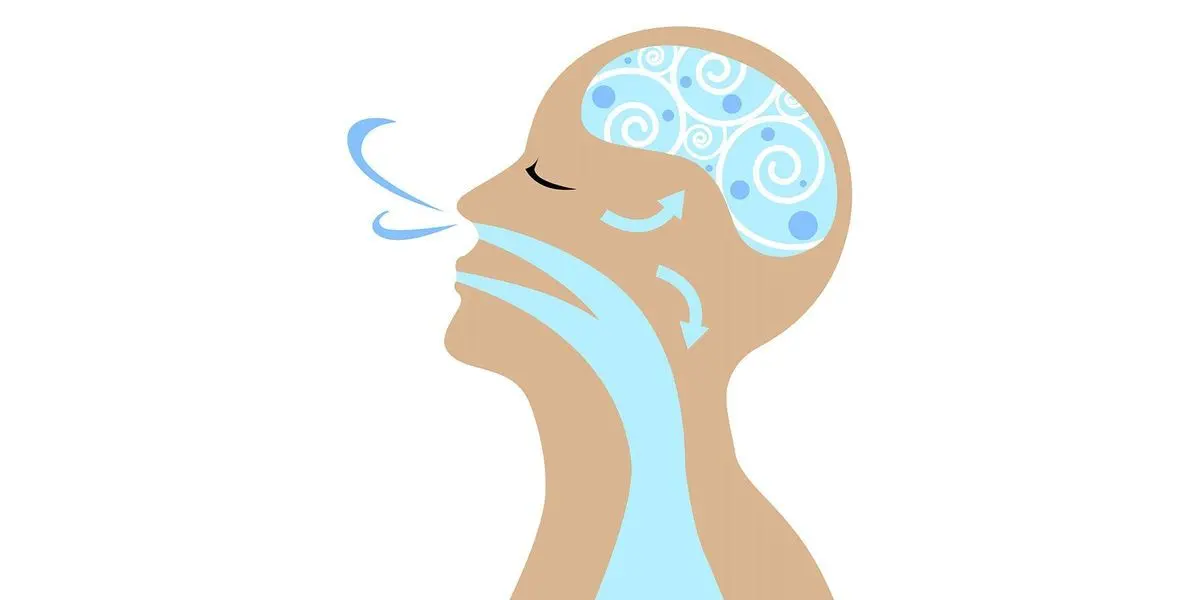
If you stop smelling your fragrance, it does not necessarily mean the perfume has worn off.
Your olfactory system can become less responsive to an odor after continuous or repeated exposure. As a result, a fragrance may seem much weaker to you even while someone else can still detect it.
This is commonly called nose blindness or olfactory fatigue. In research, the more precise concepts include olfactory adaptation and habituation.
The important distinction is simple:
How strongly you can smell your own fragrance is not always the same as how strongly the fragrance is actually performing.
What is olfactory adaptation?
Olfactory adaptation is a reduction in sensitivity after exposure to an odor.
When an odor remains present, its perceived intensity can gradually decrease. Sensitivity can then recover after exposure is reduced or removed.
The same effect occurs outside fragrance.
You may notice it when you:
- Enter a room with a strong smell and stop noticing it later
- Spend time around cooking odors
- Wear scented laundry products
- Use the same air freshener every day
- Spend time in a home with pets
The odor has not necessarily disappeared. Your response to it has changed.
Perfume can create the same problem.
You may smell a fragrance strongly immediately after spraying it, barely notice it an hour later, and assume its performance is poor even though the scent is still detectable around you.
Why does your fragrance become less noticeable?
Your sensory system is constantly processing information from the environment.
A new smell attracts attention because it represents a change. When that same odor remains relatively constant, your response to it can decrease.
Research on human olfaction suggests that reduced odor perception during continued exposure can involve processes at multiple levels of the olfactory system.
This helps explain why another person may immediately notice your fragrance while you barely notice it yourself.
To them, the scent is new.
You have been exposed to it continuously.
Olfactory adaptation vs habituation
Fragrance discussions often use several terms for the same general experience:
- Nose blindness
- Olfactory fatigue
- Nose fatigue
- Going anosmic to a fragrance
These terms are useful conversationally, but they are not always scientifically precise.
Olfactory adaptation generally refers to reduced responsiveness within the sensory system after continued odor exposure.
Habituation refers more broadly to a reduced response or attention to a repeated stimulus and can involve higher-level processing.
The processes are related and can both contribute to noticing an odor less over time.
For normal fragrance use, the practical result is similar:
You may perceive less fragrance even though the scent is still present.
Does nose blindness mean the fragrance has disappeared?
No.
Your perception of a fragrance and the fragrance's actual performance are not the same measurement.
Imagine spraying a fragrance at 8:00 a.m.
At 8:05, it smells strong.
At 9:30, you can barely notice it.
At least two things may be happening:
- The fragrance is genuinely becoming weaker as volatile materials evaporate.
- Your sensitivity to the odor is decreasing through adaptation.
Your nose alone cannot reliably tell you how much of the change comes from each factor.
Sometimes the fragrance really has faded quickly.
Sometimes it still projects while you have become much less aware of it.
Often, both are happening at the same time.
Why can someone else still smell it?
Someone else may encounter your fragrance after you have already been wearing it for several hours.
During that time, you may have been exposed continuously from:
- Your neck
- Your chest
- Your clothing
- Your wrists
- The air immediately surrounding you
The other person encounters the fragrance as a relatively new stimulus.
They may therefore notice projection or a scent trail that you have largely stopped registering.
This is why "I can't smell it anymore" is weak evidence that nobody else can smell it either.
Where you spray can affect your own perception
Application location can change how continuously your nose is exposed to a fragrance.
Areas close to the face, such as the:
- Front of the neck
- Upper chest
- Collar
- Shirt neckline
can expose you to the scent almost continuously.
These are not necessarily bad places to apply fragrance. However, they can make your own nose less useful when you are trying to judge longevity or projection.
Applying some fragrance farther from the face may make it easier to notice the scent intermittently rather than constantly.
Adaptation can still occur regardless of where you spray.
Can spraying more make nose blindness worse?
Potentially.
Stronger exposure does not guarantee that you will continue noticing a fragrance for longer.
This can create an easy mistake:
- You apply several sprays.
- The fragrance initially smells strong.
- You gradually notice it less.
- You assume it has disappeared.
- You spray more.
- Other people now experience a stronger fragrance than you realize.
Adding more fragrance every time you stop noticing yourself can therefore make performance harder to judge.
Your nose is useful, but it is not a reliable real-time projection meter.
Why some fragrances seem easier to stop noticing
Some people report becoming less aware of certain fragrances much faster than others.
That is plausible, but it is difficult to reduce the effect to one simple rule.
Adaptation can vary with the odor, concentration, exposure conditions, and individual sensitivity. A perfume is also a mixture of many aromatic materials rather than one odor.
During a wear, you might:
- Stop noticing one dominant accord
- Continue detecting another
- Notice the fragrance again when you move
- Become more aware of its base later
- Smell it again after leaving and returning to the room
This is why claims that one particular perfume ingredient always causes nose blindness should be treated cautiously.
What about ambroxan?
Ambroxan is often mentioned in fragrance discussions about nose blindness, along with strong woody, amber-like, and musky effects.
Some wearers report becoming less aware of fragrances built around these scent profiles while other people continue to notice them.
That is useful anecdotal context, but it does not establish a universal rule.
Individual sensitivity varies, perfumes contain mixtures of materials, and adaptation depends on the conditions of exposure.
Instead of assuming one ingredient is responsible, test whether the fragrance has actually disappeared or whether it has mainly disappeared from your perception.
Is nose blindness the same as anosmia?
Not exactly.
Anosmia generally refers to a loss of the sense of smell.
In fragrance communities, people sometimes say:
I go anosmic to this fragrance.
They usually mean that they stop noticing that particular perfume during wear.
For this temporary experience, olfactory adaptation or nose blindness is usually clearer language.
People can also differ in their sensitivity to specific odorants, which is different from adapting to a fragrance after continuous exposure.
Why can you suddenly smell your fragrance again?
A fragrance may seem to disappear and then become noticeable again later.
Several factors can contribute.
You moved
Walking, turning your head, moving clothing, or entering a different airflow can bring a different concentration of scent toward your nose.
You spent time away from it
Sensitivity can recover after exposure decreases.
Leaving an environment containing the fragrance and returning later may make the scent easier to notice again.
The fragrance changed
Perfumes develop over time.
You may become less aware of the opening but notice woody, musky, sweet, amber-like, or other base effects later in the wear.
Your attention changed
Attention and context can influence odor perception.
Something that draws your attention back to the fragrance may cause you to notice a scent that had faded into the background.
Why repeatedly smelling your wrist is a poor performance test
Bringing your wrist to your nose every few minutes seems like an obvious way to test longevity, but it has limitations.
Each sniff exposes you to a high concentration of a scent you have already been smelling.
It also tests the fragrance from extremely close range rather than how it behaves in the surrounding air.
Repeated wrist testing makes it harder to separate:
- Actual evaporation
- Changes in the fragrance
- Olfactory adaptation
- Differences caused by distance
- Expectations about performance
Smelling the application area can tell you whether scent remains on the skin, but it does not provide a complete measurement of projection.
How to tell whether your fragrance is actually still there
There is no perfect home test, but a few methods are more useful than constantly checking the same application point.
Spend time away from the fragrance
Move somewhere that does not contain the scent for a while.
When you return, you may notice it more clearly.
Check clothing later
Clothing can provide another reference after you have spent time away from it.
Fragrance behaves differently on fabric than on skin, so this does not directly measure skin longevity. It can still show whether the scent remains detectable.
Ask another person
Someone who has not been continuously exposed to the fragrance can provide a useful second perspective.
Ask whether they can detect it from a normal conversational distance rather than simply asking whether it smells "strong."
Test on multiple days
One wear is not enough to establish dependable performance.
Temperature, humidity, application, environment, and your own perception can all affect the result.
Repeated testing under reasonably similar conditions provides better evidence.
Do coffee beans reset your nose?
Coffee beans are often provided between fragrances in perfume stores as a way to "reset" your sense of smell.
They should not be treated as a complete reset for olfactory adaptation.
Coffee is itself a strong, complex odor. Smelling it changes the stimulus your olfactory system is processing rather than returning your sense of smell to a neutral baseline.
When testing several perfumes, a simpler approach is to:
- Take breaks
- Move into relatively neutral air
- Avoid testing too many fragrances at once
- Give your nose time between comparisons
Nose blindness can distort performance reviews
Olfactory adaptation is one reason individual longevity and projection claims should be interpreted cautiously.
Consider the statement:
I couldn't smell this after two hours, so the longevity is terrible.
That accurately describes the wearer's perception.
It does not prove that nobody else could detect the fragrance after two hours.
A stronger assessment would also consider:
- Whether scent remained on the skin
- Whether another person could detect it
- Whether it remained on clothing
- Whether the wearer noticed it again after time away
- Whether similar results occurred across multiple wears
This does not make performance reviews useless.
It means casual fragrance testing contains more uncertainty than a simple "I stopped smelling it" measurement suggests.
How this affects FragIndex longevity and projection ratings
FragIndex separates longevity and projection because they describe different aspects of performance.
- Longevity describes how long a fragrance remains detectable.
- Projection describes how far the fragrance radiates from the wearer.
Neither should be judged solely by how long one person continuously notices their own fragrance.
Community voting helps by combining observations from multiple wearers rather than relying on one experience.
However, community ratings are still subjective.
Vote count matters. A result based on only a few votes should be treated as preliminary because the average may change significantly as more people contribute.
Use FragIndex fragrance search to find a fragrance and view its available longevity, projection, and community rating data.
Nose blindness can affect clone comparisons too
Olfactory adaptation can also make comparing a clone with its original more difficult.
If you spray one fragrance on each arm and repeatedly switch between them, your perception of both scents may change during the comparison.
That can make it easy to confuse:
- Projection with similarity
- Greater strength with greater accuracy
- Adaptation with weak longevity
- A quieter drydown with complete disappearance
FragIndex treats these as separate measurements:
- Similarity: How closely does the clone smell like the original?
- Longevity: How long does the fragrance remain detectable?
- Projection: How far does it radiate?
Keeping those measurements separate produces a more useful comparison.
Browse the FragIndex clone index to explore documented clone relationships, or use the fragrance comparison tool when you want to compare an original and alternative side by side.
When should you actually question a fragrance's performance?
Not every fragrance that disappears from your perception can be explained by adaptation.
A fragrance may genuinely have weak longevity or projection.
A real performance limitation becomes more plausible when repeated tests show that:
- You can no longer detect the fragrance
- Other people also cannot detect it
- Very little scent remains at the application area
- The result occurs across multiple wears
- The result remains similar under reasonably consistent conditions
The point is not to assume that every fragrance secretly lasts all day.
It is to avoid assuming that the moment you stop noticing a fragrance is automatically the moment everyone else stops smelling it.
The practical answer
You can stop smelling your own fragrance because continuous exposure can make your olfactory system less responsive to it.
At the same time, the fragrance itself is gradually evaporating and changing. That makes it difficult to separate actual performance loss from changes in your own perception.
If a fragrance seems to disappear unusually quickly:
- Do not immediately add more sprays.
- Avoid repeatedly smelling the application area.
- Spend some time away from the scent.
- Check it again later.
- Ask someone who has not been continuously exposed to it.
- Repeat the test on another day.
Your own nose is useful, but it is not a perfect performance measurement tool.
A fragrance becoming less noticeable to you does not necessarily mean its longevity or projection has ended.
Use FragIndex fragrance search to compare your experience with available community longevity and projection ratings, while keeping the vote count in mind.
Frequently asked questions
Why can other people smell my fragrance when I cannot?
Your olfactory system can become less responsive after continuous exposure to the same odor. Someone encountering your fragrance later has not adapted to it in the same way, so they may still notice it clearly.
Does going nose blind mean my fragrance has stopped projecting?
No. Reduced perception does not prove that a fragrance has disappeared or stopped projecting. The scent may still be detectable even though you have become less sensitive to it.
Can spraying too much fragrance make nose blindness worse?
Stronger and more continuous exposure can contribute to olfactory adaptation. Adding more sprays because you can no longer smell yourself may therefore make it harder to judge how strongly the fragrance is actually projecting.
How can I tell whether my fragrance has actually worn off?
Avoid repeatedly smelling the application area. Spend some time away from the scent, check it again later, or ask someone who has not been continuously exposed to it whether they can still detect it. Testing on multiple days gives a better picture than one wear.
Is nose blindness permanent?
Normal olfactory adaptation is temporary. Sensitivity generally recovers after exposure to the odor is reduced or removed, although recovery can vary by odor, concentration, exposure, and individual.
Sources and further reading
Pellegrino et al., “Habituation and Adaptation to Odors in Humans”, Physiology & Behavior, 2017.
Dalton, “Psychophysical and Behavioral Characteristics of Olfactory Adaptation”, Chemical Senses, 2000.
Hummel et al., “Olfactory Adaptation: Recordings From the Human Olfactory Epithelium”, 2022.