
Where Should You Apply Fragrance?
There is no single perfect place to apply fragrance. The neck, wrists, chest, forearms, and clothing can all work depending on how you want the scent to wear.
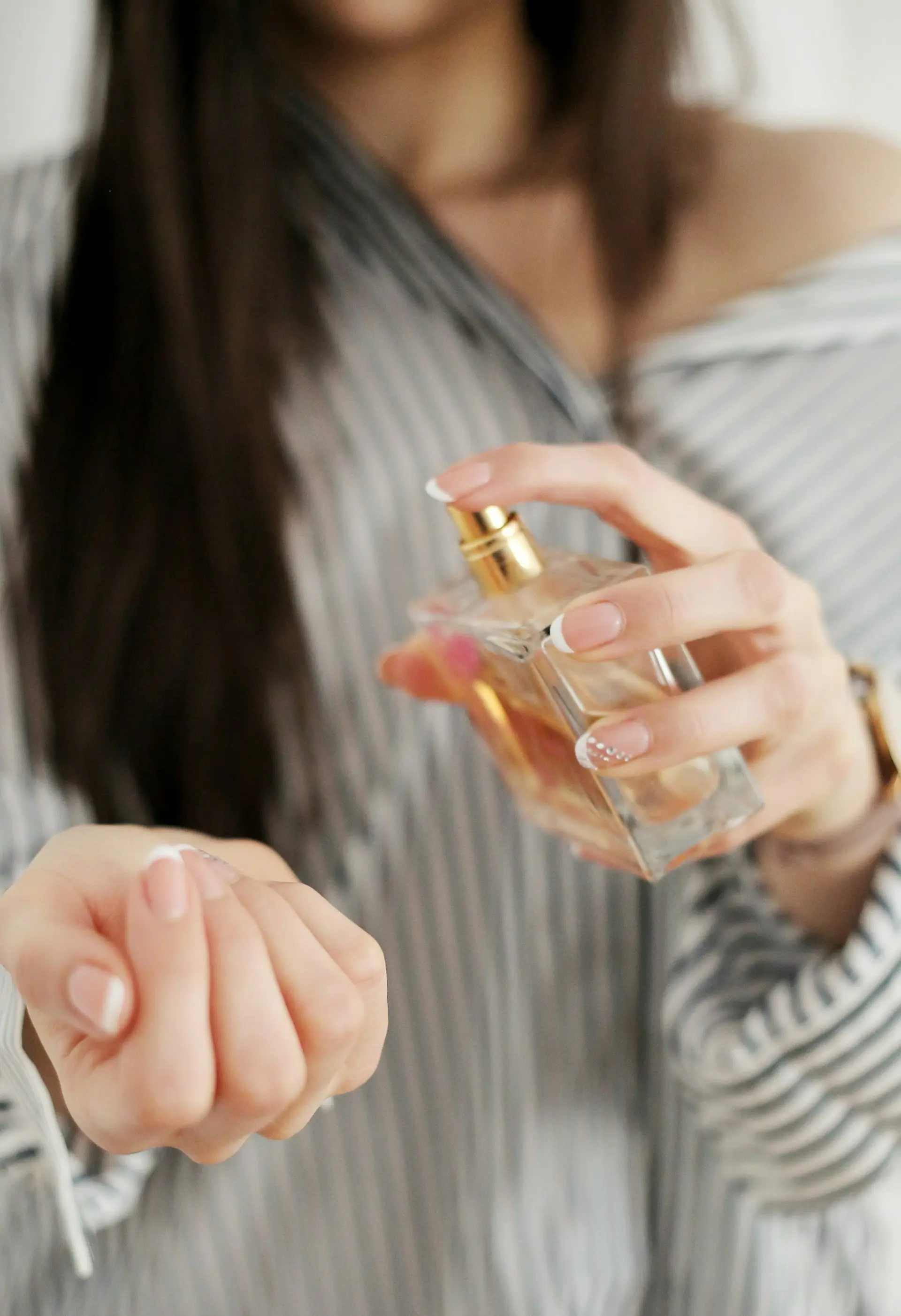
There is no single perfect place to apply fragrance.
The neck, wrists, forearms, chest, inner elbows, and clothing can all work, but they create slightly different wearing experiences.
Skin gives the fragrance a typical body-wear environment. Clothing may retain some scent materials longer. Areas near your face make the fragrance easier to notice yourself, while more distant or exposed areas can make your own perception less constant.
The best application point depends on the effect you want.
Where can you apply fragrance?
Common application areas include:
- Sides or back of the neck
- Wrists
- Forearms
- Upper chest
- Inner elbows
- Clothing
- Hair, when the product is suitable for it
Application location can affect:
- How often you notice the scent
- How much fragrance transfers to clothing
- How easily movement carries it through the air
- How quickly you become accustomed to smelling it
- How the fragrance behaves on skin versus fabric
This makes application more about preference and context than following one universal rule.
Do pulse points matter?
Pulse points such as the wrists, neck, inner elbows, and behind the ears are traditional fragrance application areas.
They are often recommended because these areas are relatively warm and exposed.
The idea that pulse points uniquely "activate" perfume through body heat is probably overstated. Fragrance evaporates wherever it is applied, and there is no need to limit perfume to pulse points.
They remain useful because they are easy to reach and often exposed to airflow and movement.
CHANEL, for example, recommends applying fragrance to pulse points such as the wrists and neck.
Useful does not mean mandatory.
Neck, wrists, chest, or forearms?
Each location has practical advantages and drawbacks.
Neck
The sides or back of the neck are common choices because they are exposed and movement can help disperse the scent.
Spraying directly beneath the nose can make the fragrance especially noticeable at first, but continuous exposure may also make you stop noticing it sooner.
If that happens often, applying farther from your face may make your own perception easier to judge.
Read Why Can You Stop Smelling Your Own Fragrance? for more on olfactory adaptation.
Wrists and forearms
Wrists are convenient for sampling and following a fragrance through the drydown.
However, they also come into contact with water, soap, desks, watches, clothing, and other surfaces that can remove some fragrance.
Forearms can provide a similar wearing experience while usually experiencing less frequent washing and contact.
Chest
The upper chest can create a more contained and personal scent because it is often covered by clothing.
It also keeps the fragrance relatively close to your nose, so heavy application there may contribute to continuous exposure.
Inner elbows
Inner elbows are another practical option. They move frequently, sit farther from the nose than the neck, and generally experience less washing than the hands and wrists.
There is no strong reason to assume they chemically improve perfume. They are simply a useful application area.
Should you rub your wrists together?
You do not need to.
A common claim says rubbing your wrists together "crushes" fragrance molecules or destroys the perfume's structure.
That explanation is exaggerated.
Rubbing can still:
- Spread the liquid away from the original application point
- Transfer some fragrance to the other wrist
- Remove a small amount through contact
- Change how the wet fragrance evaporates
The simplest approach is to spray the perfume and let it dry naturally.
Skin vs clothing
Fragrance can be worn on both skin and clothing, but it may behave differently on each.
On skin
Skin introduces variables such as:
- Natural oils
- Moisture
- Temperature
- Lotion or other products
- Individual skin characteristics
This can influence how the fragrance develops and how long it remains detectable.
On clothing
Fabric can retain some fragrance materials for longer and may create a noticeable scent trail as clothing moves.
However, clothing application also has drawbacks:
- Some perfume can stain or discolor fabric
- Delicate materials may react poorly
- The scent can remain after you want it gone
- The fragrance may develop differently than it does on skin
CHANEL recommends both skin and clothing application while warning that perfume may stain delicate fabrics.
If you are unsure, test a hidden section before spraying valuable clothing.
Should you moisturize before applying fragrance?
Applying fragrance to moisturized skin may help some wearers retain scent longer than applying it to very dry skin.
If you want to try this, use an unscented moisturizer so another fragrance does not interfere with the perfume.
Apply the moisturizer first, let it settle, and then spray the fragrance.
Do not assume that lotion dramatically changes the perfume's concentration or guarantees longer performance.
The same caution applies to petroleum jelly. It may change how fragrance sits on the skin, but claims that it dramatically increases longevity should be treated carefully.
Can you spray fragrance in your hair?
Fragrance can cling to hair, and movement can create a noticeable scent trail.
However, standard alcohol-based perfume is not necessarily formulated as a hair product, and repeated direct application may be drying for some people.
A dedicated hair mist is the more straightforward option when available.
What about spraying perfume into the air?
The "spray and walk through" method creates a light, diffuse application.
It also wastes much of the fragrance because some of the mist lands on the floor, furniture, or surrounding environment.
If you intentionally want very subtle application, it can work.
For most uses, spraying directly onto the intended skin or clothing area gives you more control.
Where should you spray for stronger projection?
No single application point guarantees strong projection.
Projection depends on factors including:
- The fragrance itself
- Number of sprays
- Temperature
- Airflow
- Clothing
- Individual perception
Exposed areas such as the sides or back of the neck, forearms, and clothing near the shoulders or torso can help a scent disperse into the surrounding air.
In practice, application amount and the fragrance's own strength usually matter more than finding one supposedly perfect pulse point.
More sprays are not automatically better. Strongly projecting fragrances can become overwhelming when overapplied.
Where should you spray for something more subtle?
For quieter wear, keeping fragrance closer to the torso or beneath clothing can reduce its immediate presence.
Options include:
- Upper chest
- One or two sprays beneath a shirt
- Lower torso
- Conservative wrist or forearm application
The fragrance itself still matters.
A strongly projecting perfume may remain noticeable with light application, while a softer fragrance may stay subtle regardless of where it is sprayed.
Application and nose blindness
Where you spray can affect how continuously you smell your own fragrance.
Application close to the face, including the front of the neck, chest, collar, and behind the ears, can expose you to the scent for long periods.
Over time, your olfactory system may become less responsive to that repeated odor.
This can make the fragrance seem weaker to you even when other people still notice it.
Applying some fragrance farther from your face may help you encounter it more intermittently.
For more detail, read Why Can You Stop Smelling Your Own Fragrance?.
Can fragrance irritate your skin?
Yes.
Fragrance is a recognized cause of allergic contact dermatitis in susceptible people. Possible symptoms include:
- Redness
- Itching
- Burning
- Rash
- Swelling
If a fragrance causes a reaction, stop applying it to the affected area.
Seek medical advice when symptoms are severe, persistent, or otherwise concerning.
Applying fragrance to clothing can reduce direct skin application, although it does not guarantee that fragrance materials will never contact the skin.
What about fragrance and sunlight?
Some fragrance materials can be phototoxic, meaning they can contribute to a skin reaction when present at sufficient concentrations and followed by UV exposure.
Certain expressed citrus oils contain furocoumarins associated with this effect.
IFRA maintains restrictions for phototoxic materials, including expressed bergamot oil and other furocoumarin-containing citrus oils, when products are intended for use on skin exposed to sunlight.
That does not mean every citrus fragrance is unsafe in the sun.
Commercial perfumes may use restricted concentrations, furocoumarin-reduced materials, synthetic substitutes, or other formulations designed to meet safety standards.
Consumers usually do not know the complete formula.
Follow the manufacturer's safety instructions, especially when a product specifically warns against sun exposure after application.
Should you apply fragrance after a shower?
You can.
Applying fragrance after showering is convenient because the skin is clean and there may be fewer competing odors.
If you use moisturizer, apply it before the fragrance.
Let your skin dry before spraying. There is no need to leave it wet, and a shower does not create a special condition that makes perfume dramatically stronger.
How many places should you spray?
There is no universal number.
Application depends on:
- Projection
- Atomizer output
- Weather
- Environment
- Occasion
- Personal preference
An unfamiliar fragrance is best approached conservatively until you understand how strongly it performs.
This is especially important because olfactory adaptation can make your own perception less reliable after continuous exposure.
Do not automatically add more sprays just because you stop noticing yourself.
A simple application setup
For ordinary wear, you could start with something like:
- One spray to each side of the neck
- One spray to a wrist or forearm
- An optional spray to the chest or clothing
This is an example, not a rule.
Strong fragrances may need less. Quieter fragrances may suit more.
The goal is to use enough fragrance for the effect you want without making it uncomfortable for the people around you.
How to test different application methods
If you want to know whether skin, clothing, or one application area works better for a fragrance, change one variable at a time.
For example:
Day one
Use the same number of sprays on the neck.
Day two
Use the same amount on the forearms.
Day three
Use the same amount on clothing.
Try to keep other conditions reasonably similar.
Then compare:
- How often you noticed the scent
- How long it remained detectable
- Whether someone else could smell it
- How the drydown changed
- Whether fabric retained it longer
This gives you more useful information than changing application amount, location, weather, and clothing all at once.
How FragIndex performance data fits in
Application method is one reason fragrance performance varies from person to person.
FragIndex separates:
- Longevity: how long a fragrance remains detectable
- Projection: how far it radiates from the wearer
- Sillage: the scent trail left behind by the wearer
Community data can provide a useful general picture, but it cannot predict exactly how a fragrance will behave with your application method.
A fragrance with strong projection may seem quieter when applied conservatively or worn beneath heavy clothing. A moderate fragrance may become more noticeable with heavier application or warmer conditions.
Use FragIndex fragrance search to view available longevity, projection, notes, accords, and community ratings.
The practical answer
There is no single best place to apply fragrance.
For most people:
- Neck: exposed and noticeable
- Wrists or forearms: convenient for following the drydown
- Chest: more contained and personal
- Inner elbows: farther from the nose and less affected by hand washing
- Clothing: may retain scent differently and sometimes longer
Pulse points are practical, but they are not required.
Apply fragrance where it creates the wearing experience you want. Let it dry naturally, avoid automatically adding more when you stop noticing it, and remember that application amount, skin, clothing, temperature, and airflow can all affect performance.
Use FragIndex fragrance search to compare your experience with available community longevity and projection data.
Frequently asked questions
What are the best places to apply fragrance?
Common application areas include the neck, wrists, forearms, chest, inner elbows, and clothing. The best choice depends on whether you want stronger personal perception, more noticeable projection, or longer retention on fabric.
Should you spray perfume on pulse points?
Pulse points such as the wrists and neck are practical application areas, but they are not required. Claims that body heat dramatically activates perfume are often overstated.
Is it better to spray fragrance on skin or clothes?
Neither is universally better. Skin gives a more typical body-wear experience, while clothing can retain some fragrance materials longer. Fabric can also stain or alter how the scent develops, so test delicate clothing first.
Should you rub your wrists together after applying perfume?
There is little reason to rub your wrists together. It is simpler to spray and let the fragrance dry naturally. Claims that rubbing completely destroys fragrance molecules are exaggerated.
Can fragrance irritate your skin?
Yes. Fragrance can irritate sensitive skin or cause allergic contact dermatitis in some people. Stop using a product on the affected area if it causes redness, itching, burning, or another reaction.
Sources and further reading
CHANEL, "Fragrance & Beauty FAQ".
American Academy of Dermatology, "Itchy Rash Could Be Contact Dermatitis".
International Fragrance Association, "IFRA Standard: Bergamot Oil Expressed".
International Fragrance Association, "IFRA Standard: Citrus Oils and Other Furocoumarins-Containing Essential Oils".